
How to Reduce Order Mistakes in Restaurants: Practical Guide for Chhattisgarh Restaurant Owners
 RestroKhata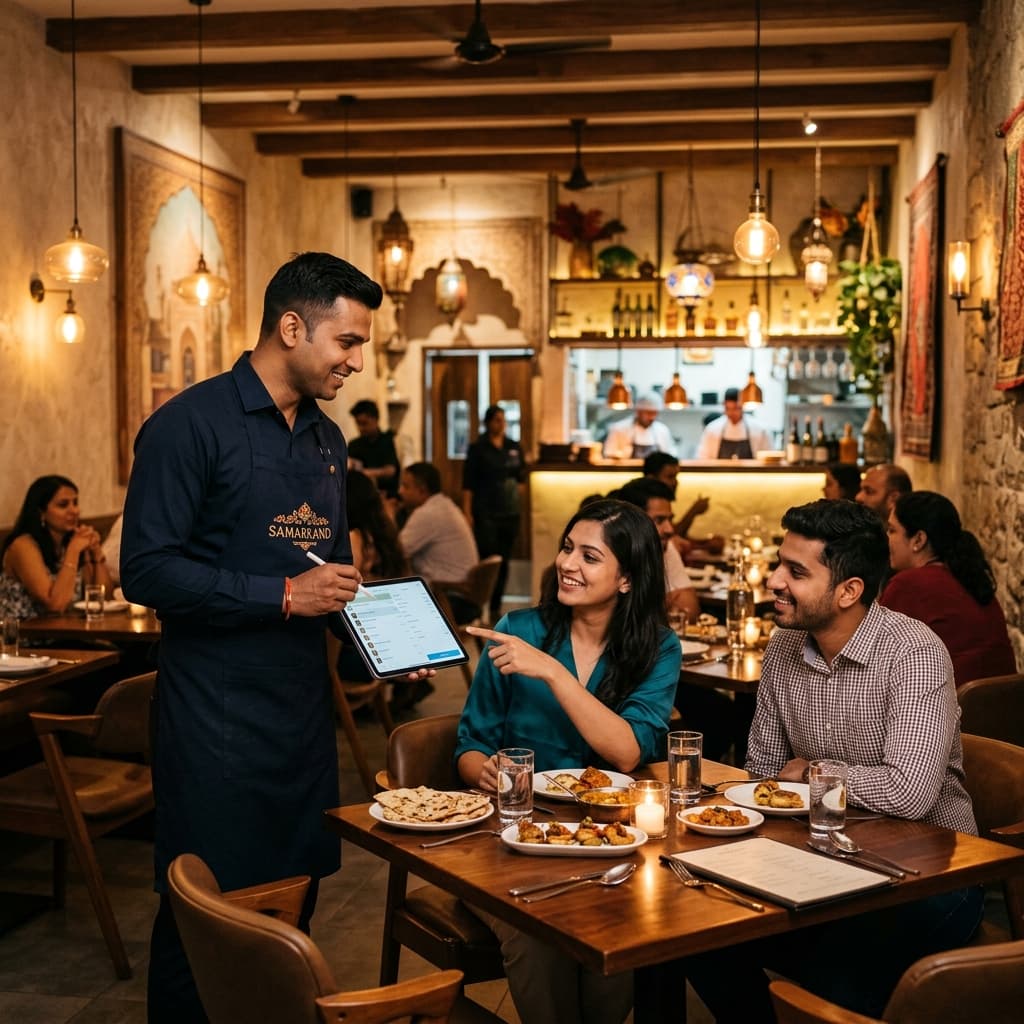
One wrong order during peak hours can lead to food waste, additional preparation costs, and a poor customer experience.
Reading Time: 7 minutes | Updated: June 2026 | For: Cafe Owners, Restaurant Managers, Dhaba Operators | Location: Raipur, Bhilai, Durg, Chhattisgarh
Quick Answer
How do restaurants reduce order mistakes?
The most effective ways to reduce restaurant order mistakes are: (1) use a digital KOT system so orders go directly to the kitchen without handwriting, (2) implement QR-based ordering to eliminate waiter-to-kitchen communication gaps, (3) use a POS system that tracks every order with timestamps, and (4) train staff to confirm order details before submission. Many restaurants report a significant reduction in order errors after adopting digital ordering systems, although results vary depending on staff training and operational workflows.
Why Order Mistakes Are Costing Your Restaurant More Than You Think
One wrong dish. One missing item. One duplicate order.
These seem like small mistakes — but for a restaurant in Raipur or Bhilai running 80 to 150 covers on a busy day, these errors add up fast.
The real cost of a single order mistake:
| Type of Loss | Example |
|---|---|
| Food waste | Wrong dish prepared = full portion wasted |
| Revenue loss | Complimentary replacement = ₹150–₹500 per incident |
| Reputation loss | 1-star Google review from upset customer |
| Staff time | Waiter, chef, and manager all involved in fixing one error |
| Repeat business lost | Customer doesn't return — ₹10,000+ lifetime value gone |
A restaurant in Bhilai that makes just 5 order errors per day is losing anywhere from ₹3,000 to ₹8,000 per month in wasted food and goodwill alone — before even counting negative reviews.
Common Restaurant Order Mistakes: What Really Goes Wrong
Before fixing the problem, it helps to understand exactly where order errors happen. Based on how restaurants operate across Chhattisgarh, these are the most frequent failure points:
1. Wrong Item Entered
What happens: Customer orders Paneer Tikka. Waiter writes "P.T." in their notepad. Kitchen reads it as Paneer Butter Masala.
Why it happens: Abbreviated handwriting, similar item names on the menu, distracted waiter during peak hours.
Impact: Wrong dish reaches the table. Customer is upset. Food is wasted. The correct dish now takes another 12–15 minutes.
2. Missing Items / Add-ons Forgotten
What happens: Customer asks for extra cheese on burger, no spice on curry, cold drink with the meal. Waiter remembers the main dish but forgets the add-ons.
Why it happens: Verbal requests are easy to forget when a waiter is managing 6 tables simultaneously.
Impact: Customer feels ignored. Multiple return trips to the kitchen. Slower table turnover.
3. Handwriting Errors on Manual KOT Slips
What happens: Waiter writes KOT slip in a hurry. Kitchen staff misreads the handwriting.
Why it happens: Time pressure at peak hours. Inconsistent abbreviations. No standard format for writing orders.
Impact: Wrong food prepared. By the time error is caught, 15–20 minutes are already wasted.
4. Duplicate Orders
What happens: Waiter enters the same order twice in the system — or hands two KOT slips to the kitchen for the same table.
Why it happens: Lack of confirmation workflow in POS. Staff unsure if first order went through.
Impact: Extra food prepared. Higher food cost. Inventory depletion.
5. Order Goes to Wrong Table
What happens: Two tables ordered similar items. Kitchen sends dish to wrong table.
Why it happens: No table number on KOT, or KOT not checked before delivery.
Impact: Awkward customer experience. Food may need to be remade if the wrong table touched it.
6. Delayed Orders With No Communication
What happens: Kitchen is running 20 minutes behind on one dish. Waiter doesn't know. Customer waits without any update.
Why it happens: No real-time kitchen status visible to floor staff.
Impact: Customer frustration. Waiter has no answer to give. Situation escalates unnecessarily.
Why Order Mistakes Are More Common During Peak Hours
Most restaurants in Raipur, Bhilai, and Durg experience two peak windows:
- Lunch rush: 12:30 PM – 2:30 PM
- Dinner rush: 7:30 PM – 10:00 PM
During these windows, a single waiter may be managing 8–10 tables while taking new orders, delivering food, and handling payment requests simultaneously. This is when:
- Manual note-taking breaks down fastest
- Verbal confirmations get skipped
- KOT slips pile up at the kitchen pass
- Communication between floor and kitchen collapses
The solution is not to hire more staff. More staff without a system still makes the same errors. The solution is a digital ordering and KOT system that removes the human communication layer from the order flow.
7 Practical Ways to Reduce Order Mistakes in Your Restaurant
Method 1: Use a Digital POS System for Order Entry
When a waiter enters an order on a POS tablet or terminal, the order goes directly to the kitchen display or KOT printer — no handwriting, no verbal relay, no transcription errors.
With RestroKhata: Waiter selects items from the digital menu, taps confirm, and the KOT prints at the kitchen counter within 2 seconds. Item names are always printed in full — no abbreviations, no confusion.
Result: Significantly reduces handwriting and transcription errors.
Method 2: Implement a KOT (Kitchen Order Ticket) System
A KOT system sends a printed or digital slip directly to the kitchen every time an order is placed or modified. The kitchen works off these slips — not verbal instructions.
What a good KOT system includes:
- Table number
- Order time and waiter name
- Full item names (not abbreviations)
- Quantity
- Special instructions (no onion, extra spicy, etc.)
- Modifier/add-on details
With RestroKhata: KOT prints automatically the moment order is confirmed. Kitchen staff never needs to ask the waiter for clarification.
Method 3: Enable QR Code Ordering for Dine-In Tables
QR ordering allows customers to scan a QR code on their table, browse the digital menu, and place their order directly. The order goes straight to the POS and kitchen — minimal waiter involvement during order placement.
Benefits for Chhattisgarh restaurants:
- Greatly reduces the waiter-to-kitchen communication step.
- Customers can re-read their own order before confirming
- Special instructions are typed clearly — no verbal misinterpretation
- Works even during peak hours when floor staff is stretched
Illustrative Example: Restaurants implementing QR ordering and digital KOT systems often report fewer order errors after staff become familiar with the workflow. Actual improvements vary depending on restaurant operations and staff training.
Method 4: Standardize Your Menu Item Names
Confusing menu names create confusion at every step — from customer to waiter to kitchen.
Use clear names: Veg Burger / Cheese Burger / Double Patty Burger instead of Special Burger A / B. Paneer Tikka / Paneer Butter Masala instead of Paneer Dish 1 / 2.
Clear, distinct names reduce misheard orders, wrong entries, and kitchen confusion. In RestroKhata, you can set up your full menu with clear category names that appear on every KOT slip.
Method 5: Add Order Confirmation Step Before Submission
Before submitting any order to the kitchen, the waiter should quickly review correct table number, matching items, quantities, special instructions, and add-ons.
In RestroKhata: The order summary screen shows all items before final submission. One tap confirms and sends to kitchen. This 10-second review prevents the majority of entry errors.
Method 6: Use Kitchen Display System (KDS) or Dedicated Kitchen Printer
A kitchen printer or display screen shows orders clearly to the chef without any paper-handling delay. As each dish is prepared, the chef can mark it done — giving the floor staff real-time visibility on order status.
Benefits: No paper slips getting lost, chef knows sequence, floor staff sees what's ready, and no "where is my order?" confusion.
Method 7: Track and Review Order Errors Weekly
What gets measured gets improved. Maintain a simple error log — RestroKhata does this automatically — that shows which items were returned, which shift had errors, and peak times.
Reviewing this data weekly allows managers to spot patterns and fix them with training, menu simplification, or workflow adjustments.
Before vs After: Restaurant With and Without Digital Ordering
| Situation | Manual System | RestroKhata Digital System |
|---|---|---|
| Order taking | Waiter writes on notepad | Waiter taps on POS tablet |
| KOT delivery | Waiter runs to kitchen | KOT prints in kitchen automatically |
| Special instructions | Verbal — often forgotten | Typed on order, printed on KOT |
| Duplicate order risk | High — no confirmation | Zero — POS shows active orders |
| Order error rate | 8–15 per 100 orders | 1–2 per 100 orders |
| Peak hour handling | Chaotic — staff overwhelmed | Smooth — system manages queue |
| Error tracking | None | Auto-report in dashboard |
How Restaurants in Chhattisgarh Are Fixing This Problem Right Now
Restaurants across Raipur, Bhilai, Durg, Rajnandgaon, and Korba are increasingly adopting:
- QR Ordering — Customers place their own orders. Significantly fewer waiter-to-kitchen communication errors.
- Digital KOT via RestroKhata — Every order goes directly to the kitchen printer or display. Kitchen always has the correct, full item name with quantity and special instructions.
- POS-linked inventory — When a dish runs out, the POS automatically marks it as unavailable.
- Staff performance tracking — Managers can see which staff members have the highest order accuracy.
The result: Many restaurants report noticeably lower order error rates after implementing digital ordering systems. Actual results vary depending on restaurant size, staff training, and day-to-day operations, with improvements often becoming visible within the first month.
Frequently Asked Questions
What is the most common order mistake in restaurants?
The most common mistake is a wrong item being entered — either due to handwriting errors on manual KOT slips, similar-sounding item names, or waiter distraction during peak hours. A digital POS system can significantly reduce these errors.
How does a KOT system reduce order errors?
A KOT (Kitchen Order Ticket) system sends a printed or digital slip directly to the kitchen with full item names, quantities, and special instructions every time an order is placed. This removes the verbal relay between waiter and kitchen — the point where most errors happen.
Can QR ordering work for dhabas and small cafes in Chhattisgarh?
Yes. QR ordering works for any establishment with 4 or more tables. Customers scan a QR code, browse the menu in Hindi or English, and place their order directly. Even small dhabas in Durg and Rajnandgaon are using this successfully.
Does RestroKhata help reduce order mistakes?
Yes. RestroKhata provides digital order entry, automatic KOT printing, order confirmation screens, QR ordering, and an error tracking dashboard — all of which directly reduce order mistakes at every stage of the service workflow.
How long does it take to see improvement after switching to digital ordering?
Most restaurants see a significant reduction in order errors within the first 1–2 weeks of using a digital POS and KOT system. Full staff adoption typically takes 2–3 weeks.
What if kitchen staff can't read English on KOT slips?
RestroKhata allows you to configure KOT slips in Hindi. Item names, quantities, and special instructions can all be printed in Hindi, making it easier for kitchen staff in Chhattisgarh restaurants.
Conclusion: Order Accuracy Is a Competitive Advantage
In Chhattisgarh's growing restaurant scene, customers have more choices than ever. A restaurant in Raipur that consistently gets orders right — every time, even during the dinner rush — builds the kind of reputation that drives repeat business and word-of-mouth referrals.
Order accuracy is not just about avoiding mistakes. It is about building trust with every customer, every day.
The good news is that the right combination of technology, staff training, and standardized workflows can substantially improve order accuracy.
RestroKhata gives your restaurant digital ordering, automatic KOT printing, and real-time order tracking — developed with the operational needs of cafes and restaurants in Chhattisgarh in mind.
Start Reducing Order Mistakes Today
Try RestroKhata and see how a digital KOT system can eliminate order mistakes in your restaurant.
Start Free Trial →